Treasure of Thror
The Treasure of Thror is the legendary hoard of gold, jewels, and masterworks of Dwarven craft that once filled the halls of the Lonely Mountain, stolen by the dragon Smaug and later the object of Thorin Oakenshield's quest. More than a simple prize, the treasure is a narrative engine that drives the plot, a symbol of lost heritage, and a corrupting force that tests the souls of those who seek it. Its allure and the dragon-sickness it breeds shape the final conflicts of the tale, ultimately leading to Thorin's death and a profound re-evaluation of value by the hobbit Bilbo Baggins.
Origins and Composition
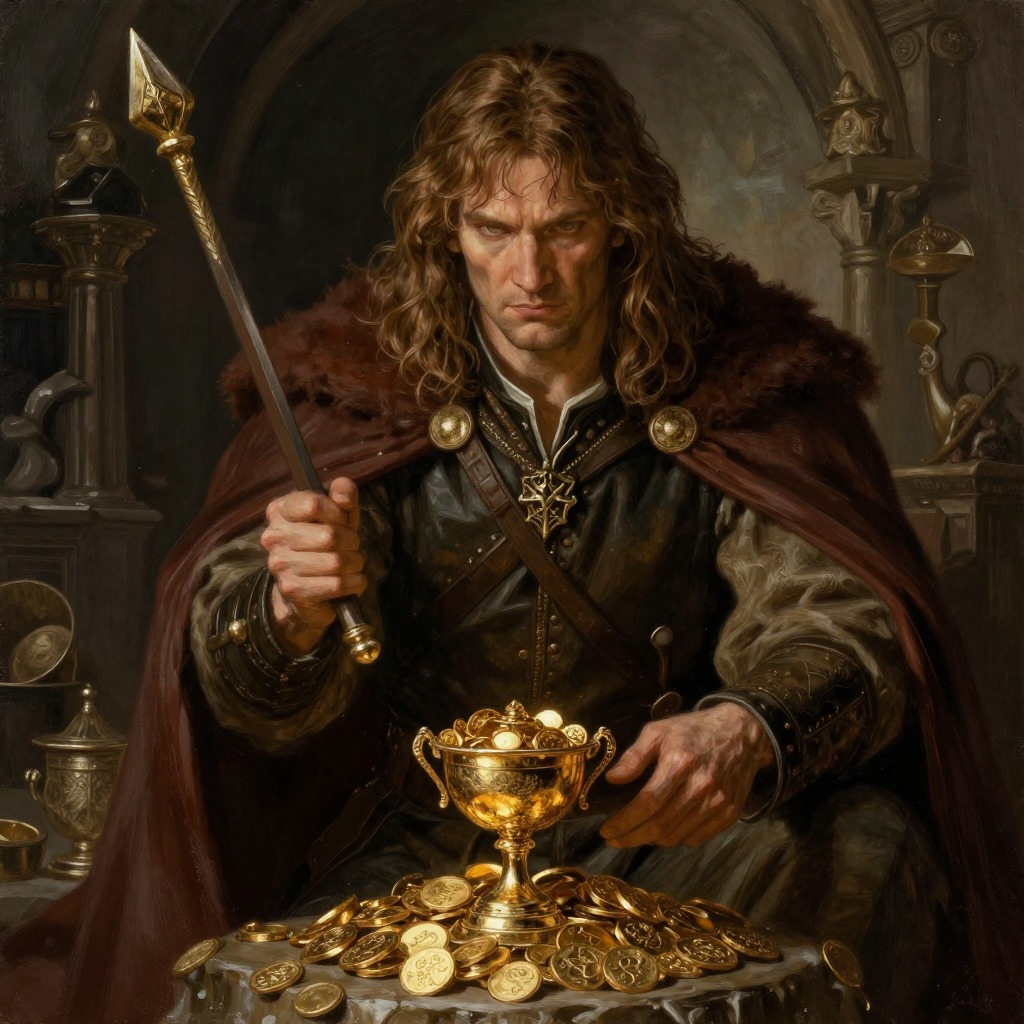
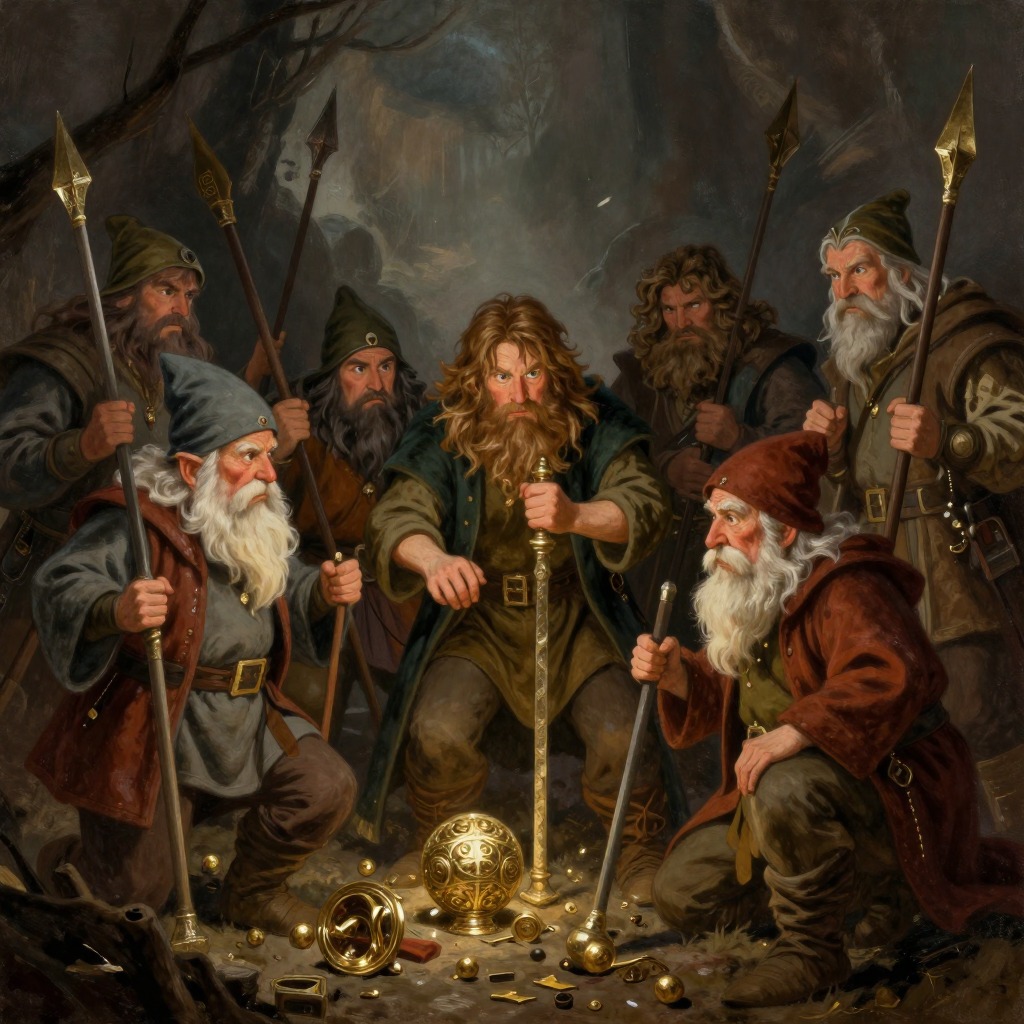
The treasure was accumulated over generations by the Dwarves of the Line of Durin, particularly under King Thror. The Dwarves mined and tunnelled deep within the Lonely Mountain, creating "huger halls and greater workshops" and discovering "a good deal of gold and a great many jewels." Their wealth and skill became legendary, with kings sending for their smiths and the toy market of Dale becoming "the wonder of the North." The hoard included not only raw gold and silver but also exquisite crafted items: goblets, harps of gold, and the famous Arkenstone, the Heart of the Mountain, a great white gem with a thousand facets that shone "like silver in the firelight, like water in the sun, like snow under the stars, like rain upon the Moon." Among the treasures were also weapons of war, such as spears made for the armies of the long-dead King Bladorthin, each with a thrice-forged head and shafts inlaid with cunning gold, and the necklace of Girion, Lord of Dale, made of five hundred emeralds.
The Dragon's Theft and the Desolation
The dragon Smaug, described as "a most specially greedy, strong and wicked worm," learned of the Dwarves' wealth and descended upon the Lonely Mountain. He destroyed the town of Dale, killed or scattered the Dwarves, and took the entire hoard for himself. He piled it all up in a great heap far inside the Mountain and slept on it for a bed. Smaug's long possession of the treasure created the Desolation of the Dragon, a barren and lifeless wasteland around the Mountain. The land, once green and fair, became bleak, with only broken and blackened stumps to speak of vanished trees. The treasure itself became tainted by the dragon's presence, its very air filled with his foul reek.
The Object of the Quest
The recovery of the Treasure of Thror is the stated goal of Thorin Oakenshield and his company. Thorin, the grandson of Thror, sees the treasure as his rightful inheritance and the restoration of his kingdom. The quest is framed as a burglary, with Bilbo Baggins hired as the "Expert Treasure-hunter" or burglar. The treasure's immense value is a constant source of motivation and conflict. The Dwarves sing of it, dream of it, and discuss what each will do with his share. The treasure is also the source of the conflict with the Wood-elves and the Men of Lake-town, who seek compensation for the destruction Smaug wrought upon them. Bard, the dragon-slayer, claims a portion of the treasure as the heir of Girion, whose wealth was also stolen by Smaug.
The Dragon-Sickness and the Siege
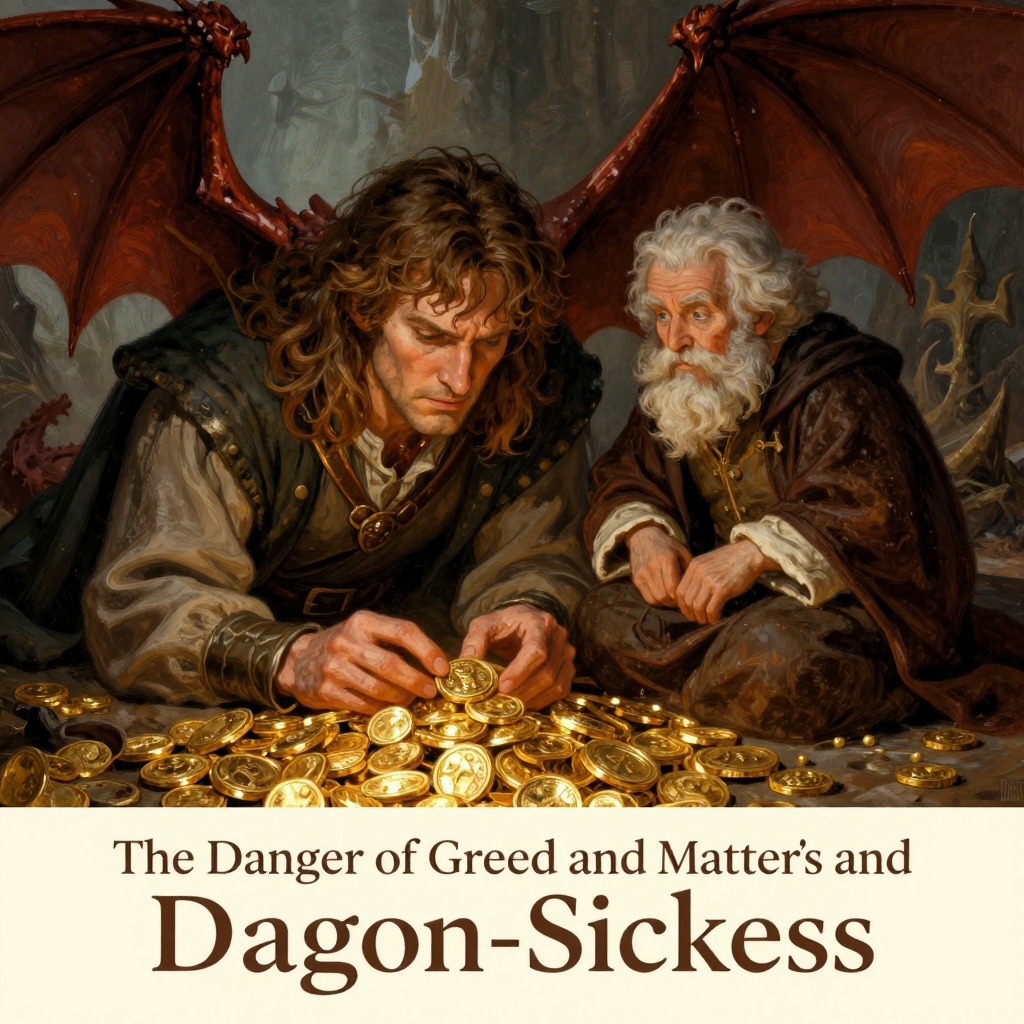
The treasure's corrupting influence, known as dragon-sickness, takes hold of Thorin after Smaug's death. He becomes obsessed with the hoard, particularly the Arkenstone, which he names to himself as beyond price. He refuses to share any of the treasure with Bard or the Elvenking, leading to a siege of the Mountain. Thorin's greed and stubbornness cause him to denounce Bilbo as a traitor when the hobbit gives the Arkenstone to Bard to use as a bargaining chip. The treasure's power blinds Thorin to reason and friendship, turning him into a grim and unyielding figure. The siege is only broken by the sudden arrival of the Goblins and Wargs, which forces the Dwarves, Elves, and Men to unite against a common enemy.
Aftermath and Distribution
Following the Battle of Five Armies and Thorin's death, the treasure is distributed. Dain, Thorin's cousin, becomes King under the Mountain and deals the treasure well. A fourteenth share of all the silver and gold is given to Bard, who uses it to reward his followers and send much gold to the Master of Lake-town. The Elvenking receives the emeralds of Girion, which Dain had restored to him. Bilbo, who had willingly given up his claim, is offered a rich reward but only accepts two small chests of gold and silver, enough for one strong pony to carry. He later uses his gold and silver largely in presents, both useful and extravagant. The treasure, once a source of greed and conflict, ultimately helps to rebuild Dale and Lake-town, bringing a new peace and prosperity to the lands. The prophecies of old songs, that the rivers would run with gold, are fulfilled, though in a fashion that Bilbo himself helped to bring about.